

Digital Safety Modelling is a structured process for identifying, understanding, and prioritising potential harms to humans arising from their interaction with or dependence upon technological systems. Where threat modelling asks “what could go wrong with this system?”, Digital Safety Modelling asks “how could this system’s behaviour—intended or otherwise—harm the human?” Read More
Category: Institutions & Organizations
In today’s world, Digital Safety and Cybersecurity are critical for protecting “Institutions & Organizations” because the boundaries between digital networks and physical reality have completely dissolved. Traditional cybersecurity, which focuses on protecting technical assets through the CIA triad (Confidentiality, Integrity, and Availability), is no longer sufficient. Modern organizations are now “digitally dependent” on complex, interconnected systems that control critical physical infrastructure, such as water purification, autonomous transport, and medical devices. Consequently, a digital failure can lead to catastrophic kinetic harm, environmental disasters, and even the loss of human life, shifting the risk from mere data loss to a direct threat to physical safety.
Furthermore, Digital Safety has become a foundational fiduciary and safety obligation for leadership, comparable to health and safety legislation. Organizations face a professionalized threat landscape where AI-driven attacks, ransomware-as-a-service, and geopolitically motivated disruptions are the new norm. To protect their long-term survival and maintain societal trust, institutions must move beyond technical compliance and adopt a safety-first mindset. This includes implementing frameworks such as TRIDENT (Train, Respond, Improve, Disrupt, Elevate, Negotiate, Transform) to build systemic resilience and ensure that, when complex systems inevitably fail, they do so in a deterministic, “safe” state rather than a catastrophic one.
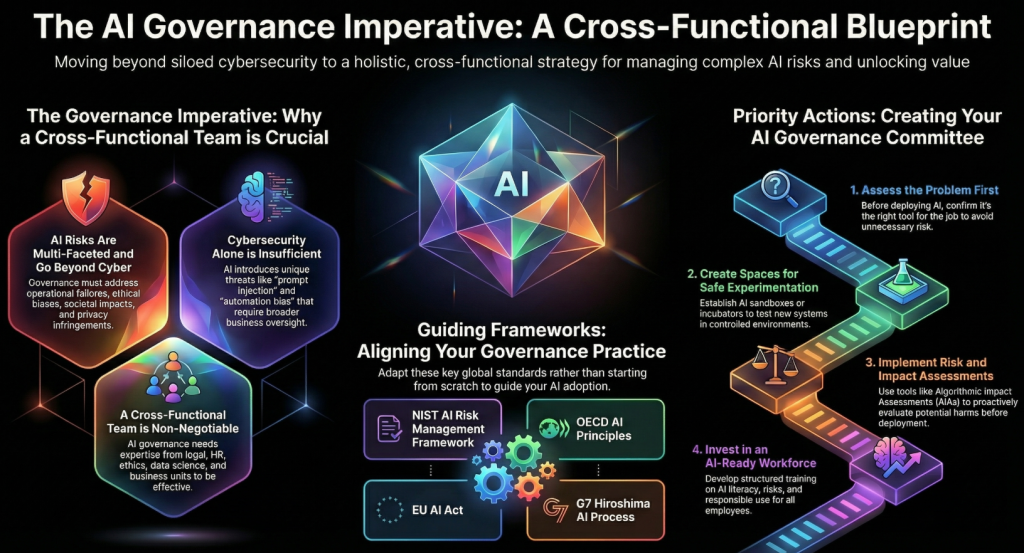
AI Governance and Digital Safety Alignment
AI adoption is inevitable but requires robust governance for success. Author Bhojraj Parmar argues that poor governance erodes trust; governance should instead foster safety, trust, and prosperity. Rushing AI adoption risks “Shadow AI,” data leaks, and insider threats. The blog advocates moving beyond narrow cybersecurity to Digital Safety, prioritizing the safety of humans, institutions, and communities. The core message is that AI governance must align with digital safety modeling to account for all types of harm when defining OKRs/KPIs. This is fundamentally a business problem, not just a cybersecurity one, and strong governance is essential for maintaining customer trust, adoption, and revenue. Read More

Meaningful Security Conversations with Your Vendors: The 2026 Q1 Guide to Digital Safety & Resilience
Executive Summary: The Imperative for a New Dialogue In the contemporary operational environment, defined by industrialized cyber warfare and systemic supply chain compromises—exemplified by the Salt Typhoon and Volt Typhoon campaigns—the evaluation of network vendors has shifted from a procurement checklist to a strategic imperative. Organizations can no longer rely solely on perimeter defenses; they Read More
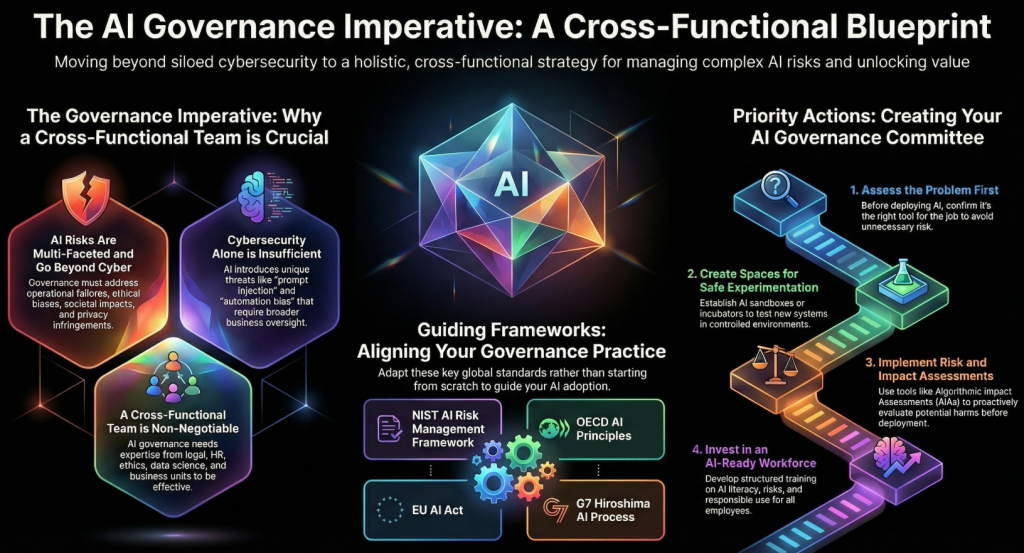
AI Governance and Digital Safety Alignment
Bhojraj Parmar Erosion of Trust The CEO has just returned from Silicon Valley. He/She is excited and declares that we are going to implement an AI first strategy across the business. She/He exclaims “these are special times, we have an opportunity to be leaders and do right for our customers and stakeholders”. Everyone claps and Read More
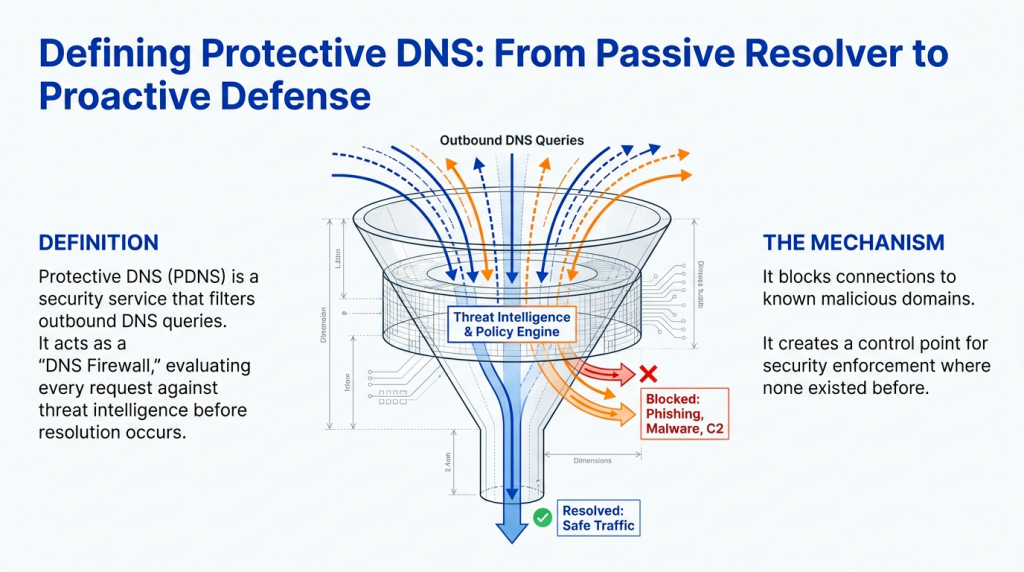
What is Protective DNS and Why Is It Critical to Your Cybersecurity Defensive Architecture?
The Domain Name System (DNS) is the foundational address book of the internet, a ubiquitous and trusted protocol that underpins virtually all online activity, from browsing websites to sending emails. This inherent trust and ubiquity, however, make it a primary target for cyberattacks, with global cybercrime damages projected to reach $6 trillion annually. Because it Read More